Malta Company for Brazilians: Tax and Refund System 2026
Quick answer
A Malta company pays 35% on profit, and the shareholder can claim a refund of 6/7 of that tax, leaving a 5% effective burden in the general case. Malta is not on Receita's treaty list, and the controlling individual pays 15% in Brazil under Law 14,754.
- Malta company tax rate
- 35%
- Refund to the shareholder in the general case
- 6/7of the company's tax
- Effective burden in the general case
- 5%
- Minimum capital of a private company
- €1,164.69
- Law 14,754 rate on controlled entity profits
- 15%individual
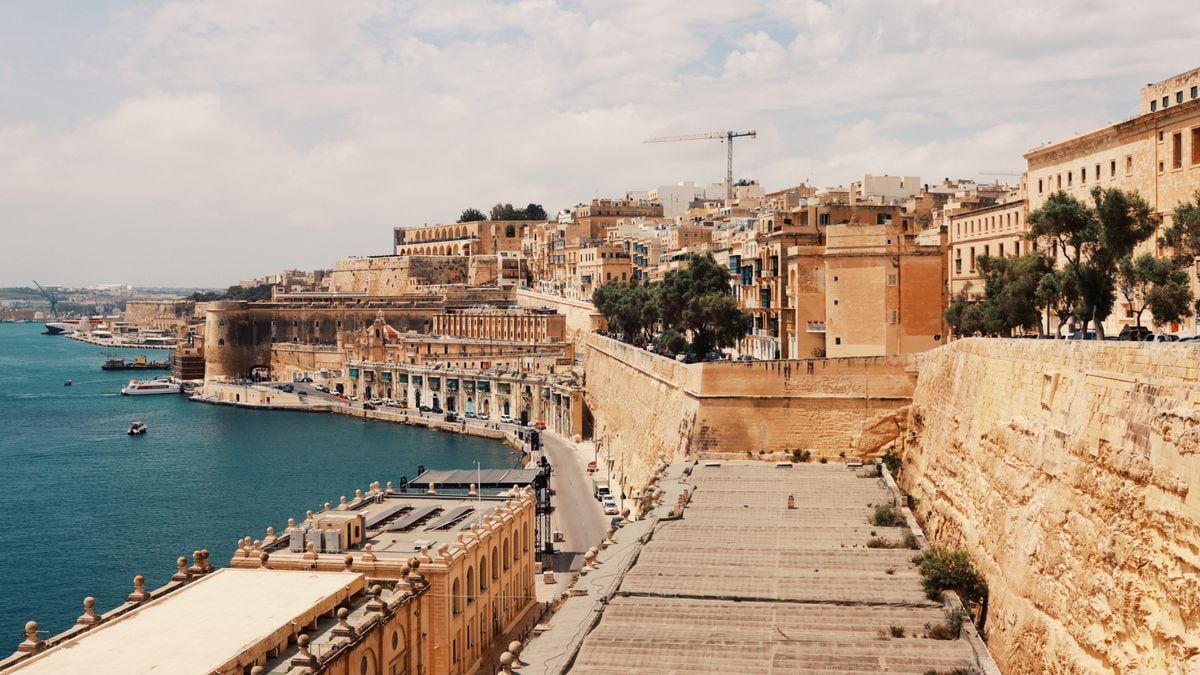
A Malta company pays 35% tax on profit, and the shareholder who receives dividends can claim a refund of 6/7 of that tax, bringing the effective burden to 5% in the general case. For Brazilians, the central point is different: there is no Brazil-Malta treaty on Brazil's Federal Revenue Service (Receita Federal) list.
In addition, an individual who controls the company pays 15% in Brazil on the profit on December 31, under Law No. 14,754/2023 (Lei 14.754/2023).

| Point | What the official source says | Source |
|---|---|---|
| Company tax rate | 35% on taxable profit | Income Tax Act (Cap. 123), art. 56(6) |
| Refund to the shareholder | 6/7 of the company's tax in the general case; 5/7 on passive income | Income Tax Management Act (Cap. 372), art. 48(4A) |
| Effective burden in the general case | 5% (35% minus 6/7) | Calculation based on arts. 56(6) and 48(4A) |
| Minimum capital (private company) | €1,164.69, with 20% paid up at signing | Companies Act (Cap. 386), art. 72 |
| Treaty with Brazil | Malta is not on Receita Federal's list | Receita Federal |
| Brazilian controlled-entity law | Profits taxed on December 31, at 15% | Law 14,754, arts. 2 and 5 |
How does Malta's refund system work?
Malta uses a full imputation system. The company pays 35% on profit (Income Tax Act, art. 56(6)), and the shareholder, upon receiving a dividend, can claim back part of that tax. The refund does not reduce the company's tax rate. It is a claim made by the shareholder after the distribution.
The fractions come from the Income Tax Management Act (Cap. 372), art. 48:
- •6/7 of the tax: this is the general rule for dividends paid out of profits allocated to the Malta taxed profits account or the foreign income account (art. 48(4A)(a)). That leaves 1/7 of 35%, that is, 5%.
- •5/7 of the tax: applies when the dividend comes from passive interest or royalties, or from dividends on a holding that does not meet the conditions of art. 12(1)(u) of the Income Tax Act. That leaves 2/7 of 35%, that is, 10%.
- •No refund: if the profit is in the foreign income account and the company has already claimed double taxation relief, that same profit does not generate a refund under art. 48(4A).
- •2/3 of the tax: art. 48(4) provides this fraction for dividends from profits in the foreign income account (or from an international trading company) paid to a shareholder not resident in Malta, with conditions on the ownership and domicile of the person who controls it.
The refund can never exceed the tax the company actually paid to the Commissioner on that profit. The shareholder must also be registered as provided in the regulations. The rules change, and the consolidated text of Cap. 123 names the Maltese tax authority as the Commissioner for Tax and Customs. Confirm the fractions and the procedure on the CFR portal and at legislation.mt before calculating any distribution.
Participation exemption: when is a dividend received exempt?
Art. 12(1)(u) of the Income Tax Act exempts the income and gains that a company registered in Malta earns from a participating holding. The definition in art. 2 includes, among other cases:
- •directly holding at least 5% of the shares, with a right to at least 5% of two items among voting, distributable profits and assets on liquidation;
- •having an investment of at least €1,164,000, held for an uninterrupted period of 183 days or more;
- •having the right to appoint a director in the investee.
For dividends from holdings acquired on or after January 1, 2007, the exemption also requires the investee to meet a condition: be resident or incorporated in the European Union, be subject to foreign tax of at least 15%, or have no more than 50% of its income in passive interest or royalties. If none is met, two alternative conditions apply (a holding that is not a portfolio investment and minimum taxation of 5%). The full text is in the Income Tax Act.
How is the company set up and what does the Companies Act require?
The Companies Act (Cap. 386) sets out the basic rules for a private company:
- •Minimum authorized capital: €1,164.69, subscribed by at least two persons (art. 72(1)).
- •Paid-up capital: at least 20% of the nominal value of each subscribed share, at signing of the memorandum (art. 72(3)).
- •Management: at least one director (art. 137(2)).
- •Secretary: every company must have a company secretary (art. 138(1)).
- •Registered office: the law requires a registered office address in Malta in the incorporation documents.
Registration and annual fees are listed at the Malta Business Registry. Fees for lawyers, accountants and administrators vary by provider, and there is no official schedule. For that reason this guide gives no total cost range: ask for a written quote.
What does Brazil say about Malta?
Treaty. Receita Federal's list of agreements to avoid double taxation (updated on August 28, 2026) does not include Malta. Without a treaty, there is no treaty rule to invoke to reduce tax or resolve a residency conflict. See the official page before any decision, because new agreements may enter into force.
Tax haven list. Malta does not appear in art. 1 of IN RFB 1,037/2010. Art. 2, item IX, however, classifies as a privileged tax regime the Maltese regime applicable to International Trading Companies (ITC) and International Holding Companies (IHC). Law No. 9,430/1996 (Lei 9.430/1996), art. 24, uses a rate threshold below 17%, and Malta's nominal 35% is above it. Anyone with an older structure using these regimes should check the classification.
Individual controller. Law 14,754/2023 taxes the controlled entity's profits on December 31 of each year (art. 5), at a rate of 15% (art. 2, § 1), without waiting for distribution. But the art. 5 regime only reaches a controlled entity that (i) is in a favored-taxation country or has a privileged tax regime, or (ii) has own active income below 60% of total income (§ 5). An operating Maltese company may fall outside; a holding that receives mostly dividends, interest or royalties tends to fall under item II, because that income does not count as own active income (§ 6).
Tax paid in Malta. The law allows deducting the tax owed abroad by the controlled entity (art. 5, § 15), but bars deducting tax that is subject to refund, restitution, reimbursement or compensation abroad (art. 4, § 3, referenced by § 15, V). Since the Maltese refund is exactly that, the refundable portion of the 35% tax should not be treated as a credit in Brazil.
Brazilian legal entity. For a company domiciled in Brazil, Law 12,973/2014, art. 77, brings into taxable profit and the CSLL base the portion of the investment adjustment equivalent to the profits of the controlled entity abroad.
What declarations does a Brazilian need to file?
- •DAA (Annual Adjustment Return): the individual declares the controlled entity, the taxed profits and the cost of the dividend credit receivable, separately (Law 14,754, art. 5, §§ 10 and 11).
- •CBE (Brazilian Capital Abroad report): the capital abroad declaration is annual when, on December 31, the declarant's total assets and funds abroad are equal to or greater than USD 1 million. See the Census of Brazilian Capital Abroad.
- •Information exchange: Malta signed the CRS Multilateral Competent Authority Agreement on October 29, 2014, with the first exchange in September 2017, according to the OECD list. Accounts and holdings in Malta are not beyond Receita's reach.
Is Malta the right choice?
Ask these questions before comparing numbers:
- •Will the company have real activity, with clients, contracts and a team, or will it be only a holding?
- •Who will receive the dividends, and where is that person tax resident?
- •Could the Brazilian shareholder bear 15% tax on all profit every year, even without distribution?
- •Is there a treaty to ease the tax? For Malta, today there is not.
To compare jurisdictions, see the Malta page, international tax planning, corporate structures and the guide to business accounts abroad. For the risk of the company being treated as based in Brazil, read about permanent establishment and the 15% global minimum tax. This article covers a company in Malta, not residence or a golden visa: for that, see the comparison of golden visas in Europe.

Need consulting?
Talk to a specialist via WhatsApp and clear your doubts about offshore structuring.
Talk on WhatsApp
Dr. Heitor Miguel
Attorney registered at OAB/SP 252,633. MBA in Business Law and M&A from FGV. Specialist in International Law and iGaming. President of the International Law Commission at OAB/SBC. Deal Maker of the Year 2014 – IAE Awards.
What is the tax rate for a company in Malta?
The rate on the company's profit is 35% (Income Tax Act, art. 56(6)). The shareholder can claim a refund of part of that tax upon receiving dividends: 6/7 in the general case, which leaves a 5% effective burden, or 5/7 on passive income, which leaves 10% (Income Tax Management Act, art. 48(4A)).
Is there a treaty between Brazil and Malta?
Malta is not on the list of agreements to avoid double taxation published by Receita Federal (updated on August 28, 2026). Check the official page before deciding, because new agreements may enter into force.
Is Malta on Receita's tax haven list?
Malta is not in art. 1 of IN RFB 1,037/2010. Art. 2, item IX, however, cites the regime of International Trading Companies and International Holding Companies as a privileged tax regime. Law 14,754 also reaches controlled entities with own active income below 60% of total income, even outside those lists.
Do I have to pay tax in Brazil on the Malta company's profits?
If you are an individual resident in Brazil and control an entity that falls under art. 5, § 5, of Law 14,754, the profits are taxed on December 31 of each year, at 15%, even without distribution. If the controlled entity does not fall under the cases in § 5, the art. 5 regime does not apply, and the analysis changes. Ask for an opinion on your case.
Does the 6/7 refund become a tax credit in Brazil?
It should not. Art. 4, § 3, of Law 14,754 bars deducting foreign tax that is subject to refund, restitution, reimbursement or compensation, and art. 5, § 15, V, refers to that bar for the controlled entity's credit.
What is the minimum capital to open a company in Malta?
For a private company, the minimum authorized capital is €1,164.69, subscribed by at least two persons, with at least 20% of the nominal value of each share paid up at signing of the memorandum (Companies Act, art. 72).
- Research
Malta: Income Tax Act (Cap. 123)
legislation.mt
- Research
Malta: Income Tax Management Act (Cap. 372)
legislation.mt
- Research
Malta: Companies Act (Cap. 386)
legislation.mt
- Research
Malta Business Registry
mbr.mt
- Research
Receita Federal: agreements to avoid double taxation
www.gov.br
- Research
Receita Federal: IN RFB 1,037/2010
normas.receita.fazenda.gov.br
- Research
Law 9,430/1996
www.planalto.gov.br
- Research
Law 14,754/2023
www.planalto.gov.br
- Research
Law 12,973/2014
www.planalto.gov.br
- Research
Federal Government: Census of Brazilian Capital Abroad
www.gov.br
- Research
OECD: signatories of the CRS Multilateral Competent Authority Agreement
www.oecd.org